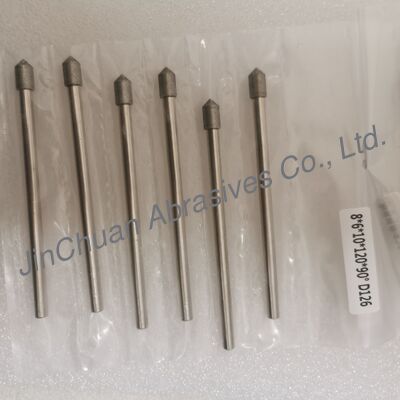
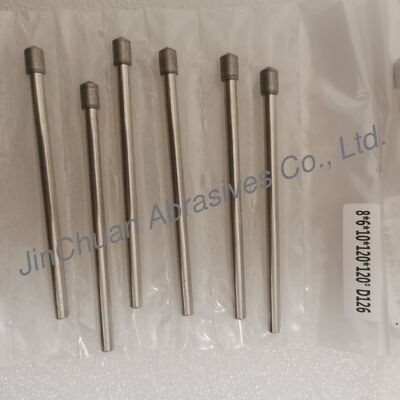
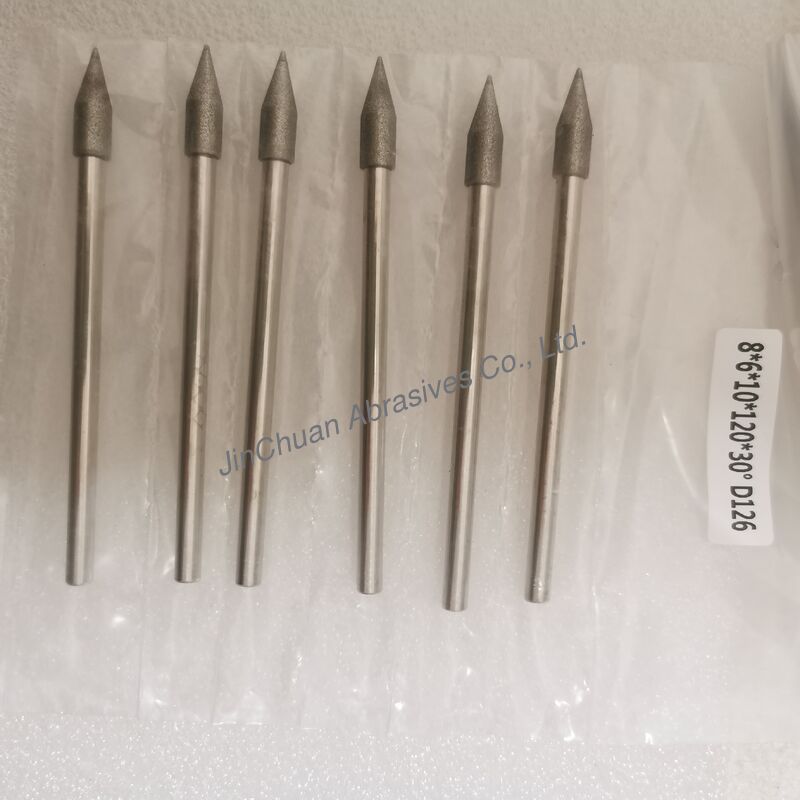
Product Description:
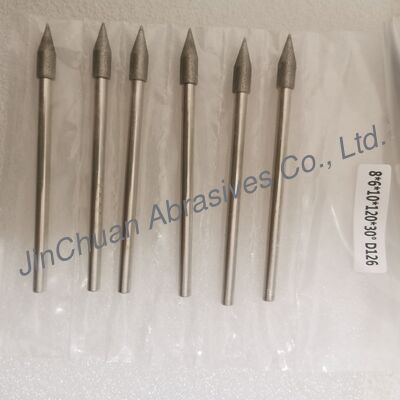
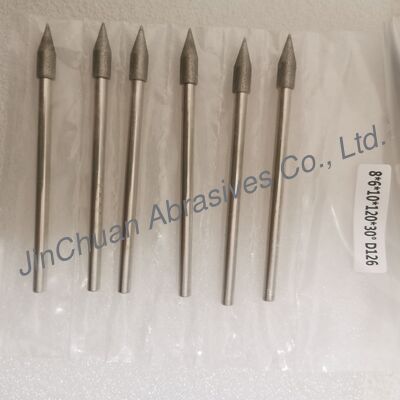
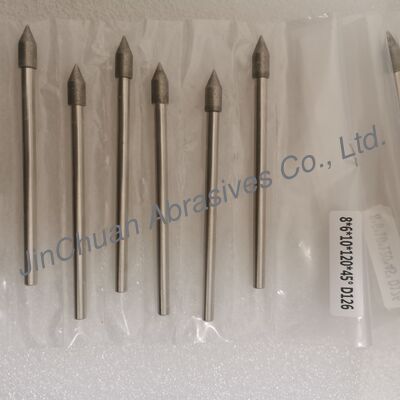
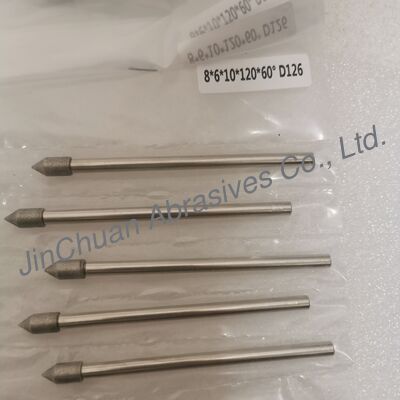
Electroplated diamond grinding heads are grinding tools formed by securely bonding a layer of diamond abrasive to a steel substrate surface through a metal electroplating process. They are particularly suitable for processing hard and brittle materials such as cemented carbide, ceramics, glass, and gemstones.
The base of the grinding head is typically made of 45# steel, stainless steel, high-speed steel, or tool steel. It serves a supporting and mounting function, and its shape is customized according to requirements, generally including cylindrical, conical, spherical, and curved shapes. The bonding layer is mainly nickel or nickel-cobalt alloy. It is grown by electrodeposition, mechanically embedding and fixing the diamond particles. The abrasive layer consists of diamond particles. Different particle sizes, concentrations, and grades are selected according to processing requirements.
The abrasive layer consists of diamond particles. Different particle sizes, concentrations, and grades are selected according to processing requirements.
Particle sizes: Coarse grinding (80/100#~120/140#), semi-fine grinding (140/170#~200/230#), fine grinding (325/400#).
Features:
1,Extremely high hardness and wear resistance:
Diamond is the hardest substance in nature, far exceeding that of cemented carbide, resulting in high grinding efficiency and long service life.
2,Sharp cutting edges:
The electroplated layer is thin, and the diamond particles are highly exposed, resulting in sharp cutting edges, low grinding force, and relatively low heat generation.
3,Suitable for complex shapes:
The electroplated layer can accurately replicate the shape of the substrate, making it ideal for manufacturing small-sized, irregularly shaped grinding heads.
4,No dressing required:
Ready to use out of the box, convenient to use.
Technical Parameters:
| Material |
High-speed steel |
| Abrasive layer |
Diamond |
| Length |
120mm |
| Package |
Individually sealed packaging |
| Delivery time |
7 working days |
| Grit Size |
D126 |
| Country Of Origin |
China |
| Application |
For Cemented Carbide |
| Size |
8*6*10*120 mm |
Applications:
1,Sharpening and regrinding of carbide cutting tools: back angles and cutting edges of drills, end mills, reamers, etc.
2,Precision grinding and polishing of molds: especially complex, narrow grooves and edges.
3,Internal grinding of carbide workpieces: grinding of small diameter and non-standard holes.
4,Surface machining of carbide rolls and forging dies.
5,Form grinding of carbide gears and grooves.



 Your message must be between 20-3,000 characters!